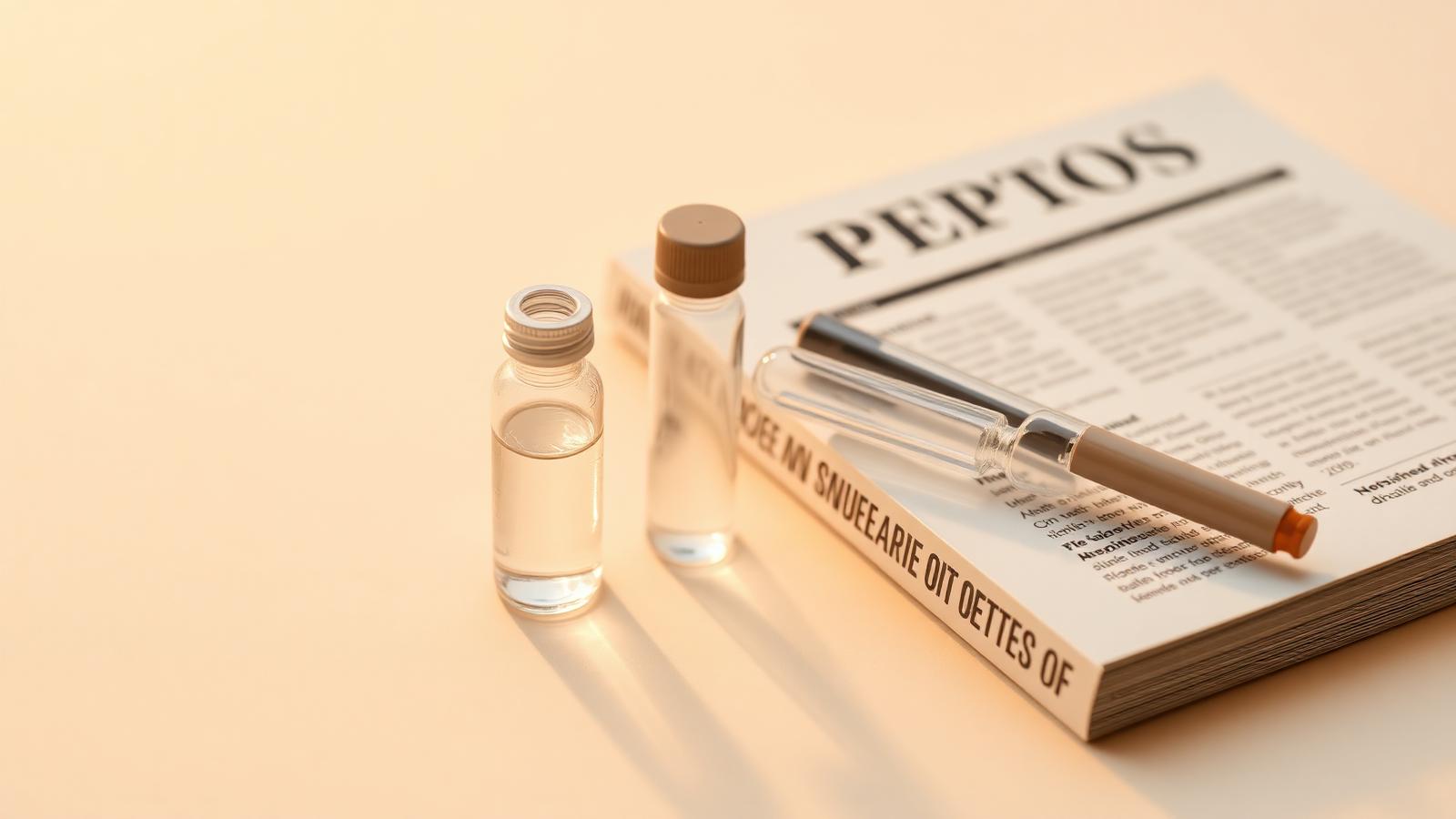
Let us be entirely honest. Nobody gets into the world of peptides because they are excited about storage logistics. You do not spend late nights scrolling through forums, reading about how to heal an annoying shoulder injury with BPC-157 or improve your sleep with CJC-1295, just so you can nerd out over refrigeration temperatures. You want the results. You want the fast recovery, the deep sleep, and the joint relief.
But here is the cold, hard truth that the flashier peptide influencers rarely talk about. If you do not care about the incredibly boring details of handling and storing these delicate little vials, you might as well be injecting very expensive, room temperature water.
These compounds are not like traditional gym supplements. They are not like a tub of pre workout that can survive in your hot car trunk for three months. They are highly fragile, temperamental, and incredibly easy to ruin. Since these are research only compounds we are talking about, there is already plenty of uncertainty in the mix. You certainly do not want to add user error to the list of reasons why your research is not yielding results.
What to Do When the Mail Carrier Arrives
Let us start with the moment the package drops on your porch. Usually, your vials arrive in a small bubble wrap envelope. Maybe there is a tiny ice pack inside that has already melted into a lukewarm puddle of gel. Instantly, panic sets in. You wonder if the transit heat has already killed your expensive new compounds.
In almost all cases, you can breathe a sigh of relief. Unreconstituted peptides, which is just the scientific way of saying the freeze dried powder inside the vial, are surprisingly resilient. They are in a stable, dormant state. They can easily survive transit at room temperature for a couple of weeks without losing their potency.
However, that does not mean you should leave them sitting on your kitchen counter next to the microwave for a month.
The rule for freeze dried vials is simple. If you are going to use them in the next few weeks, putting them in the fridge is perfectly fine. If you bought a larger stash that is going to sit around for months, they need to go in the freezer.
I used to be incredibly paranoid about this. I would wrap each individual vial in aluminum foil like a tiny baked potato to protect it from the light. You really do not need to go that far. Just keep them in a dark, sealed container to block out light and moisture. A simple plastic tupperware box in the back of your freezer does the job perfectly.
Just make sure your freezer does not have an aggressive auto defrost cycle. Those cycles work by constantly swinging the temperature up and down to melt frost. For sensitive peptide chains, those constant temperature shifts are a slow death sentence.
The Reconstitution Trap
This is the exact step where most people get sloppy, and it is usually because they are in a rush to start their research. You have your vial of powder, you have your bottle of bacteriostatic water, and you want to get going.
If you take your syringe, draw up the water, and blast it directly onto the powder like you are power washing grease off a driveway, you have probably just ruined the entire vial.
I wish I was exaggerating, but I am not. Peptides are held together by relatively weak chemical bonds. Some of them, like BPC-157, are a bit more rugged and can handle a little rough treatment. Others, like human growth hormone or longer chain formulas, are incredibly delicate.
When you reconstitute, you want to aim the needle at the glass wall of the vial. Let the water trickle down the side slowly, like a gentle stream. Do not let the water jet spray directly onto the freeze dried puck of powder at the bottom.
Once the water is in the vial, put the shaker cup mentality away. Do not shake the vial. I know the temptation is there to shake it like a cocktail to make it dissolve faster, but you must resist. Shaking can shear the delicate peptide chains, breaking them apart and rendering them useless.
Instead, just gently swirl the vial between your thumb and forefinger. If there are still floaters or cloudy patches, do not panic. Just set the vial down in the fridge for ten or fifteen minutes. It will dissolve on its own. Patience is a cheap way to protect your investment.
While we are on the subject of water, always use bacteriostatic water, not plain sterile water. Bacteriostatic water contains a tiny amount of benzyl alcohol, which acts as a preservative to stop bacteria from growing inside the vial. Since you will be drawing multiple doses from the same vial over several weeks, you absolutely need that preservative. Plain sterile water does not have this, meaning bacteria can start multiplying the second you puncture the vial.
Why Your Fridge Door is a Death Sentence
Once your peptide is mixed with water, the clock starts ticking. It is now in its most vulnerable, liquid state. It must be kept cold, ideally between two and eight degrees Celsius.
But please, do not put your reconstituted vials in the fridge door.
I know it is tempting. There are those neat little shelves, maybe a butter compartment that seems like the perfect custom garage for your tiny vials. But the fridge door is the single worst place in the entire appliance.
Every time you open the fridge to grab some milk, the door swings out into the warm room air. The temperature spikes, then drops when you close it, then spikes again when someone else opens it. On top of that, every time the door is slammed shut, those delicate peptide chains in your vials get physically vibrated.
Instead, push your vials to the back of the fridge, ideally on a middle shelf. Keep them in a dedicated, opaque container so they do not get knocked over by a jar of pickles. The back of the fridge has the most stable temperature, the least amount of light, and the least amount of physical movement.
The Reality of Expiry Dates
This is an area where the science is a bit fuzzy, and because these are research only compounds, you will find a lot of conflicting opinions online. There is no magic digital calendar that tells you the exact second a peptide goes bad.
As a general rule, once a peptide is reconstituted, you want to use it within three to four weeks. Some well behaved compounds might last up to six weeks if kept perfectly cold, dark, and still, but the potency will start to degrade over time.
It is not like milk. It will not curdle, turn sour, or smell bad when it goes off. It just slowly loses its effectiveness. If you are using a peptide and notice the effects seem to be tapering off toward the end of the vial, it might not be your body building a tolerance. The compound itself might just be breaking down.
This is why I generally prefer smaller vials over massive, high volume ones. It is much better to reconstitute fresh powder more often than to try and stretch a single giant vial over two months.
Handling the Travel Headache
What happens when you have to go out of town? If you are going on a road trip or a flight, the logistics get annoying very quickly.
My honest advice is simple. If you can avoid traveling with reconstituted peptides, do it. It is usually more trouble than it is worth to maintain the cold chain while dealing with airport security or hotel mini fridges. A few days off your protocol is rarely going to ruin your long term progress.
But if you absolutely must travel with them, invest in a cheap insulin travel case. These are small, padded cases that come with gel packs designed to keep things cool for a few hours.
Just make sure you do not let your liquid peptides freeze. While freezing is great for the dry powder, freezing a liquid, reconstituted peptide will destroy it instantly. As water freezes, it expands into sharp ice crystals. Those crystals act like tiny knives, cutting up your delicate peptide chains. Once a mixed vial freezes, it is garbage.
Keep It Simple
At the end of the day, peptide storage does not require a degree in molecular biology. It just requires you to slow down, pay attention, and stop being lazy with your gear.
Treat these vials like fragile glass art. Keep them cold, keep them dark, and handle them like they are worth the hard earned cash you spent on them. Your research, and your wallet, will thank you for it.
Grab the free one page reconstitution and dosing cheat sheet. No spam, just the math.