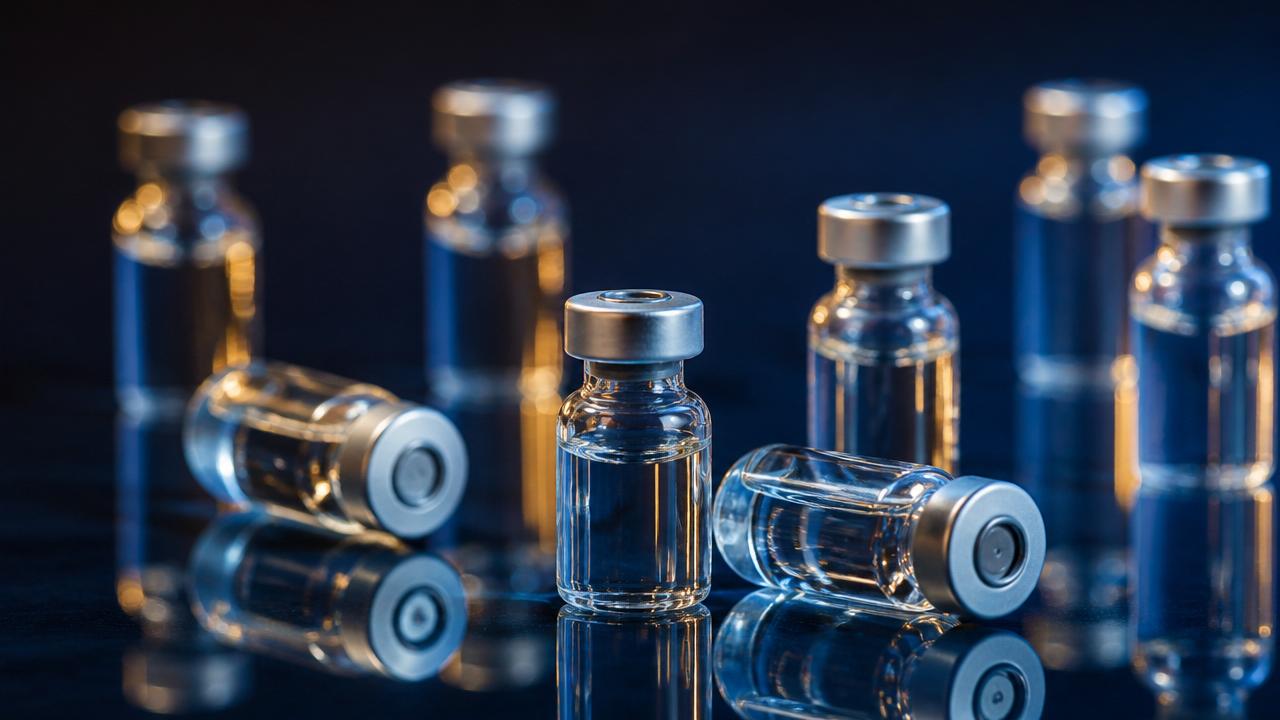
The simplest definition
A peptide is a short chain of amino acids — usually between 2 and 50 — linked by peptide bonds. Think of them as tiny messengers. They do not build tissue directly like protein; instead, theysignal your cells to behave in specific ways. Some tell your pituitary to release growth hormone. Others tell fibroblasts to lay down collagen. Some calm inflammation; others turn it up.
How peptides work in the body
Your body already makes thousands of peptides naturally. Insulin is a peptide. Oxytocin is a peptide. The ones used in research are either identical to human sequences or slightly modified to last longer or bind more strongly. When you inject a peptide subcutaneously, it enters the bloodstream, finds its receptor on a target cell, and triggers a cascade — usually within minutes to hours.
Because peptides are highly specific, they tend to have fewer off target effects than small molecule drugs. That specificity is why researchers study them for everything from tendon repair to fat loss to neuroprotection.
The most common categories
GLP-1 agonists like Tirzepatide and Retatrutide suppress appetite and improve glycemic control.
BPC-157 and TB-500 accelerate tendon, ligament, and gut lining repair through angiogenesis.
CJC-1295, Ipamorelin, and Tesamorelin stimulate natural GH pulses without shutting down your axis.
Epitalon and FOXO4-DRI target cellular senescence and telomere maintenance.
Are peptides safe?
Peptides sold for research are not FDA approved for human consumption. That said, many have extensive safety data from clinical trials — especially the bioregulators and GH secretagogues. The risks are generally dose dependent and reversible: water retention, mild blood sugar shifts, injection site irritation, and rare allergic reactions. The best practice is to start low, use sterile technique, and source from a verified vendor.
How to get started
- 1Pick a goal. Fat loss, healing, muscle, sleep, or longevity. Use our peptide library to browse by category.
- 2Learn the protocol. Every peptide has a recommended dose, frequency, and cycle length. Read the full entry before ordering.
- 3Practice reconstitution. Our step by step guide walks you through mixing, drawing, and storing.
- 4Use the calculator. Enter your vial size and BAC water into our visual syringe tool so you never guess the draw.
Key terms to know
- Subcutaneous (SubQ)
- Injection into the fatty tissue under the skin — the standard method for most peptides.
- Reconstitution
- Mixing lyophilized (powder) peptide with bacteriostatic water to create an injectable solution.
- Mcg vs mg
- Micrograms (mcg) and milligrams (mg). 1 mg = 1,000 mcg. Most peptide doses are measured in mcg.
- Cycle
- A planned period of use followed by time off — e.g., 8 weeks on, 8 weeks off.